
Mitla and Hierve el Agua in one cultural day
Mitla adds Zapotec history and archaeology to a day at Hierve el Agua. Tule and Teotitlán del Valle add different interests: a living tree in a churchyard and a tradition of wool weaving with natural dyes. Decide which of those experiences you want, then choose the combination whose itinerary and inclusions match it. A list of valley place names should not replace that decision.
The selected outings have different scopes. The eight-hour natural-springs cultural trip names Hierve el Agua, Mitla and Tule, with admissions extra. The eleven-hour small-group option centres on Hierve el Agua and Teotitlán with mezcal, also with admissions extra. The eleven-hour office-meeting combination includes admissions to Hierve el Agua, Tule and Mitla. Use those concrete distinctions when budgeting and comparing the cultural day.
Our picks: cultural combinations
Choose the tour with admissions included for Hierve el Agua, Tule and Mitla. The small-group option limits each vehicle to 18 people; the other excursion offers pickup by option.
Hand-picked tours, booked through Viator and GetYourGuide. Prices are indicative starting prices in US dollars (as of November 2026). Tap a tour for live availability and the current price in your currency.
Hierve el Agua and Mitla excursion
- English-speaking tour guide
- Soft drinks
The excursion also visits Tule. Entrance fees are extra.
Check availability →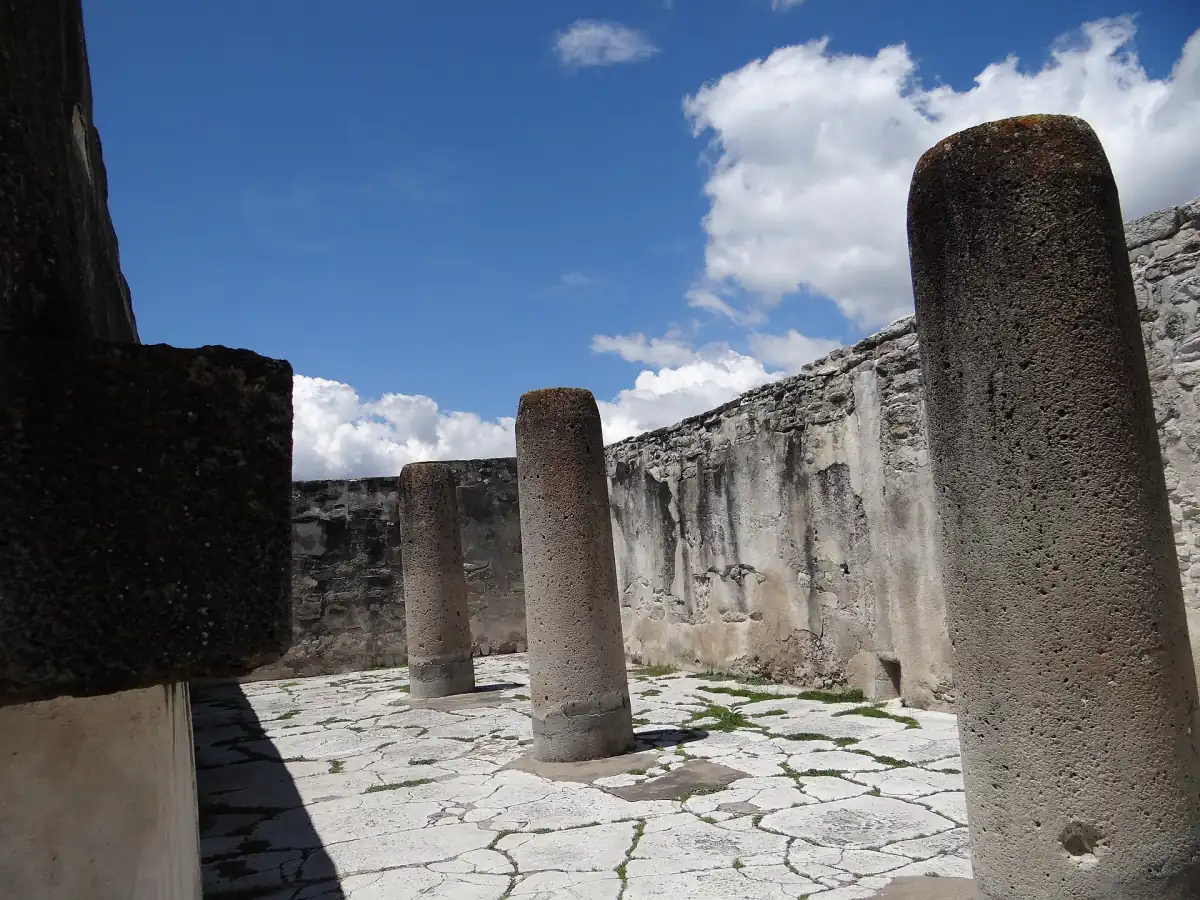
Hierve el Agua, Tule and Mitla
- Admissions to the visited sites
- Local guide at Hierve el Agua
- Certified bilingual guide
Admissions cover Hierve el Agua, the Tule Tree and Mitla. Snacks and coffee are included.
Check availability →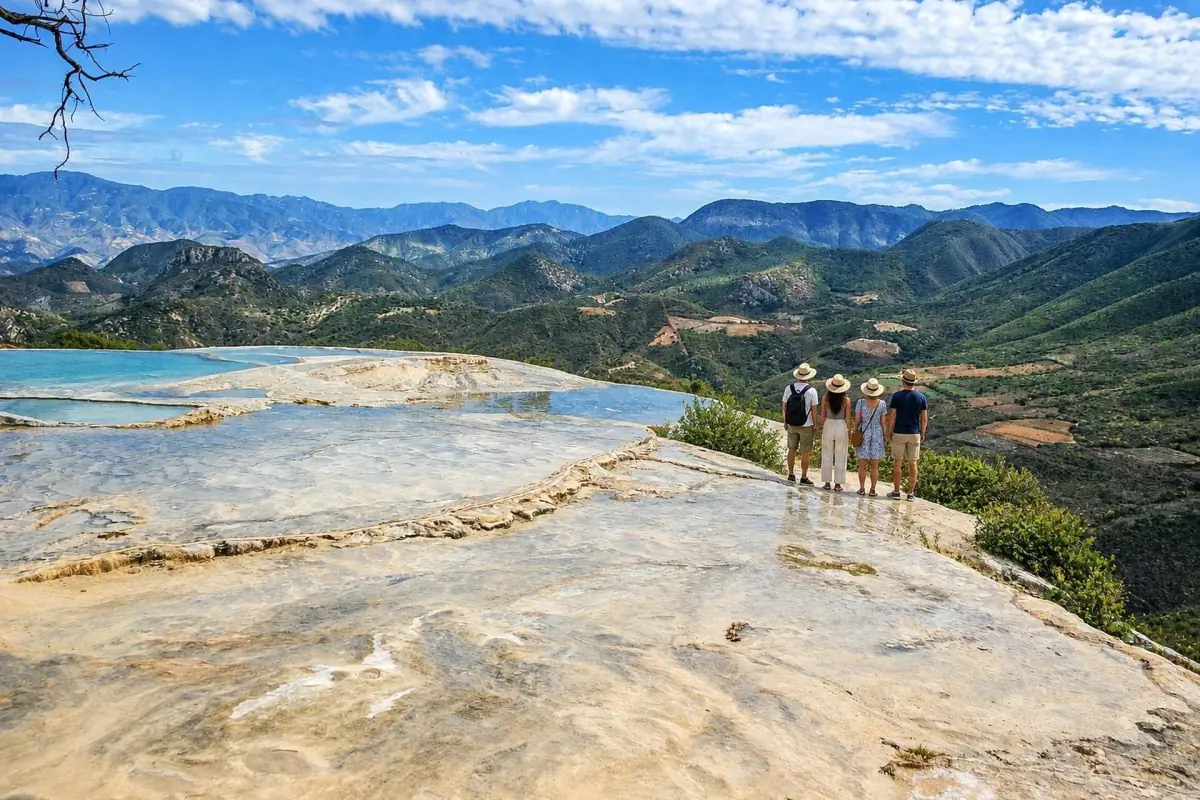
Hierve el Agua in a small group
- Licensed/local guide
- Mezcal Tasting
- Fully air-conditioned vehicle
Up to 18 people travel per vehicle, with drop-off in the town centre. Entrance fees are extra.
Check availability →Cultural combinations with Hierve el Agua
Compare the Mitla-and-Tule route, the Teotitlán small-group day and the combination including three site admissions.
History and archaeology of Mitla
INAH places Mitla within Zapotec history, with settlement beginning around AD 200 and a period of flourishing around AD 1200. These dates concern Mitla itself. At Hierve el Agua, the cultural context is the pre-Hispanic irrigation system and a probable sacred role described by Oaxaca’s tourism portal. Visiting both gives you two distinct parts of a regional story rather than a single interchangeable stop.
Give archaeology a place in your choice of route. The springs-and-culture excursion includes an English-speaking guide, transport and soft drinks; the office-meeting combination includes a certified bilingual guide and a local guide at Hierve el Agua. Those service descriptions help explain the day, without promising a specialist archaeological or architectural tour at every stop.
Visiting Mitla and its stone buildings
For practical planning, the INAH visitor listing viewed on 11 November 2026 gives opening hours of 08:00 to 17:00, with final access at 16:30. It lists 210 MXN for foreign visitors and 105 MXN for Mexican visitors. These are the archaeological site’s charges, so keep them separate from the price of an excursion and from the fees at Hierve el Agua.
The same listing prohibits smoking, bringing food and pets. If admission is extra on your chosen combination, allow for the category applicable to you. Check concessions individually instead of building a family budget around a blanket exemption. The office-meeting outing includes Mitla admission together with the springs and Tule, making it a useful comparison for visitors who want those three entries covered.
Árbol del Tule: the tree stop
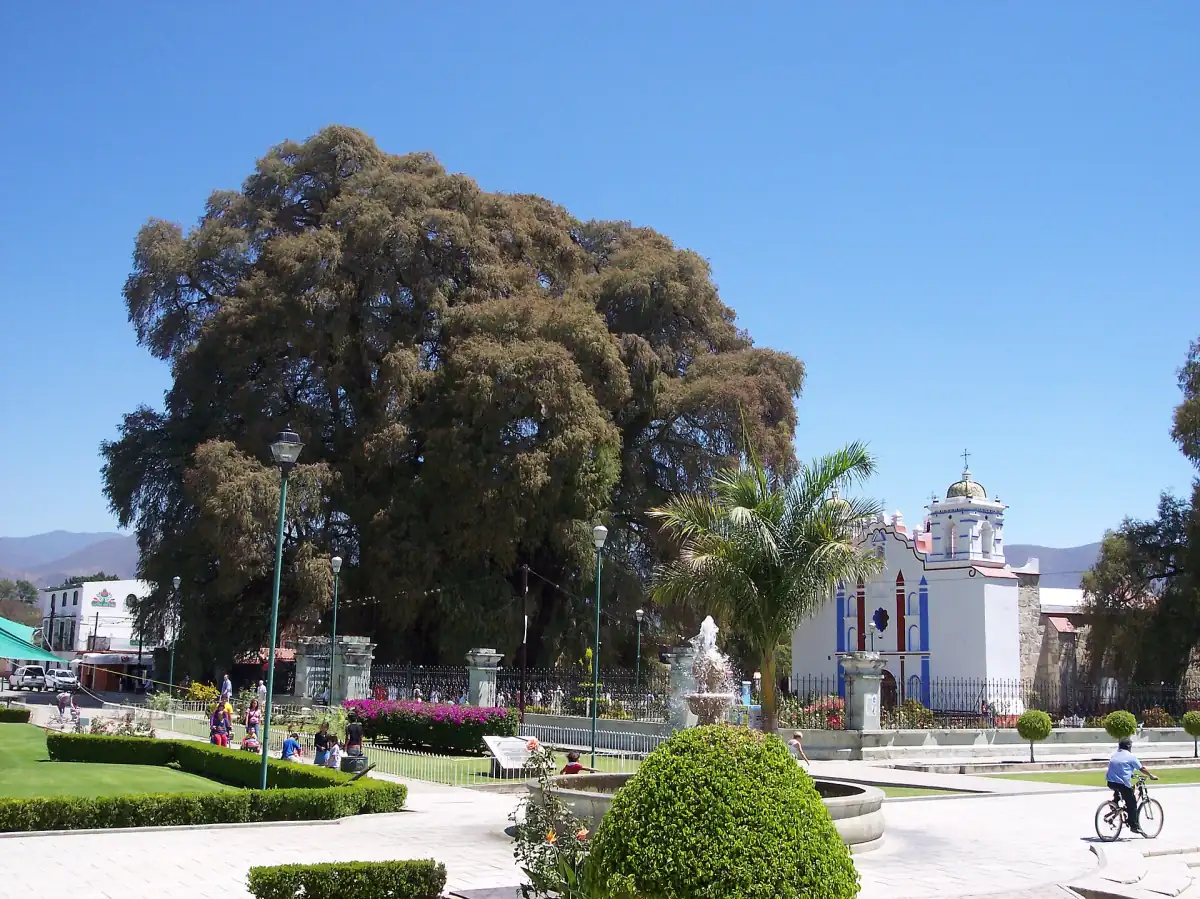
The tree stands in the churchyard of Santa María del Tule. It is an ahuehuete, Taxodium mucronatum. The municipal website places the town roughly 12 kilometres from Oaxaca along the road towards Mitla. This is a botanical and village stop alongside the archaeological and natural-site portions of a cultural circuit.
Choose a route that explicitly includes Tule if entering there matters to you. On the eight-hour cultural excursion, admission is extra. On the eleven-hour office-meeting combination, it is included. Match the amount of time and the access arrangements to the chosen programme rather than assuming every valley outing makes the same stops. The photograph illustrates the tree and church setting, not a particular tour group.
Weaving and natural dyes in Teotitlán del Valle
Oaxaca’s tourism portal describes family workshops working with wool and natural dyes in Teotitlán del Valle. It also describes a craft market and community museum. For a tour focused on weaving, look for the actual workshop component; a museum visit is a separate activity to include only when offered.
The selected Teotitlán combination is an eleven-hour small-group excursion with a maximum of 18 people per vehicle. It includes a licensed or local guide, an air-conditioned vehicle and mezcal tasting. Hotel collection depends on the selected option, with return to the town centre. Admissions and food are extra. For a stronger focus on the tasting part of the day, compare the mezcal combinations.
Choose the complete day, including the return
The office-meeting combination lasts eleven hours and includes snacks, coffee, bottled water and mezcal tasting as well as the three admissions and the guiding described above. Its documented start is a blue-fronted office meeting point. Use the meeting instructions for the precise location. The eight-hour springs cultural route offers collection according to the selected option, while the Teotitlán outing returns to the centre.
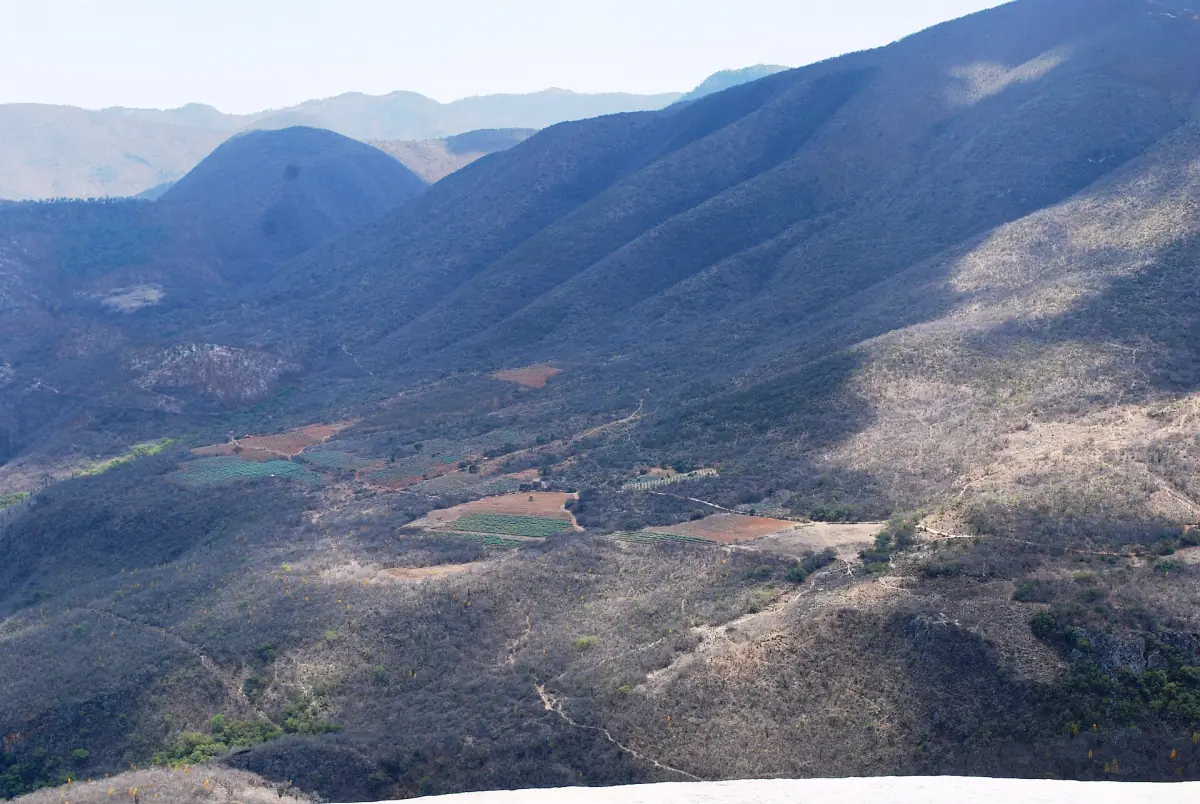
For planning as of 11 November 2026, check the day’s access to Hierve el Agua and the local pool instructions. Build the day around its cultural visits and mineral landscape. Read the tour-format comparison or choose a more focused departure from Oaxaca if the extra cultural stops are less important. The entry guide covers practical questions at the springs.
Questions about cultural combinations
Does every outing visit Mitla, Tule and Teotitlán?
Choose by the specific programme. The springs cultural route names Mitla and Tule; the small-group route focuses on Teotitlán and mezcal; the office-meeting combination includes admissions to Hierve el Agua, Tule and Mitla.
Which combination includes the site admissions?
The eleven-hour office-meeting combination includes entry to Hierve el Agua, Tule and Mitla. It also includes a local guide at the springs, a certified bilingual guide, snacks, coffee, water and mezcal tasting.
Is a museum visit part of a weaving stop?
A weaving workshop and the community museum are different visits. Choose the textile activity for its workshop focus and include a museum only when it forms part of the selected programme.