
Choosing the best time to visit Hierve el Agua
The best time to visit Hierve el Agua depends on whether your priority is a month with statistically less rain, a walk around the formations or time by the mineral pools. For a rainfall-led choice, November to February is the drier period in the regional Oaxaca station table. Use that seasonal pattern to shortlist dates, then plan the actual visit around the day's conditions.
Weather planning and access planning answer different questions. A dry month helps with choosing when to travel, while the local forecast and instructions at the site guide your day. Keep your journey from Oaxaca and your entry arrangements alongside the weather check rather than treating a season as a complete visit plan.
Regional weather normals from Oaxaca, 1991 to 2020
The SMN/CONAGUA table uses the Oaxaca station's reference period of 1991 to 2020, in an edition issued on 6 November 2026. The temperature columns give monthly normals for daily maximum and minimum temperature. Rainfall is the average monthly total. These values describe a regional seasonal pattern, while Hierve el Agua needs its own day-specific forecast.
Read the columns according to the question you are asking. The maximum column helps compare the typical daytime warmth between months; the minimum column gives a different part of the daily temperature pattern. The rainfall column helps distinguish the drier and wetter parts of the year. A monthly total gives context for choosing dates rather than a schedule of rainy days.
Keep the station location in mind when choosing clothing and planning your time outdoors. The records concern Oaxaca city. Use them as preparation for the region, then adjust your day bag and walking plans to the forecast for the destination. This keeps a useful climate comparison from becoming an assumption about conditions at a particular pool or viewpoint.
Our pick: a guided visit
This guided excursion includes admission to Hierve el Agua and round-trip transport.
Hand-picked tours, booked through GetYourGuide. Prices are indicative starting prices in US dollars (as of November 2026). Tap a tour for live availability and the current price in your currency.
A walking and springs outing with cultural stops
The eight-hour outing includes Hierve el Agua admission, a bilingual guide, transport with tolls, a Teotitlán textile demonstration and a guided mezcal tasting; meals are extra.
Drier months and the regional rainy season
November to February has lower rainfall in this table. If limiting the chance of a rain-affected day is your main seasonal preference, start by comparing those months. The temperatures still deserve attention: a drier month is a rainfall description, so read its maximum and minimum values as well when deciding what to pack.
May to October is the wetter part of the regional pattern, with the largest monthly rainfall value in June. April has the highest mean daily maximum temperature in the table. These comparisons help you choose between seasonal priorities without assigning identical weather to the individual days of a month. Leave room to adjust an outdoor plan after seeing a nearer forecast.
| Month | Daily maximum normal °C | Daily minimum normal °C | Rainfall mm |
|---|---|---|---|
| January | 28.9 | 10.3 | 2.4 |
| February | 31.1 | 11.6 | 4.6 |
| March | 33.3 | 13.6 | 17.6 |
| April | 34.9 | 15.8 | 47.3 |
| May | 33.8 | 16.7 | 97.9 |
| June | 30.9 | 16.7 | 188.3 |
| July | 30.1 | 15.9 | 118.6 |
| August | 30.0 | 15.9 | 131.8 |
| September | 29.1 | 16.1 | 163.6 |
| October | 29.3 | 14.5 | 63.1 |
| November | 29.0 | 12.3 | 9.1 |
| December | 28.9 | 11.0 | 9.0 |
Source: SMN/CONAGUA, Oaxaca station, normals for 1991 to 2020, edition of 6 November 2026.
Planning a walk or time by the pools
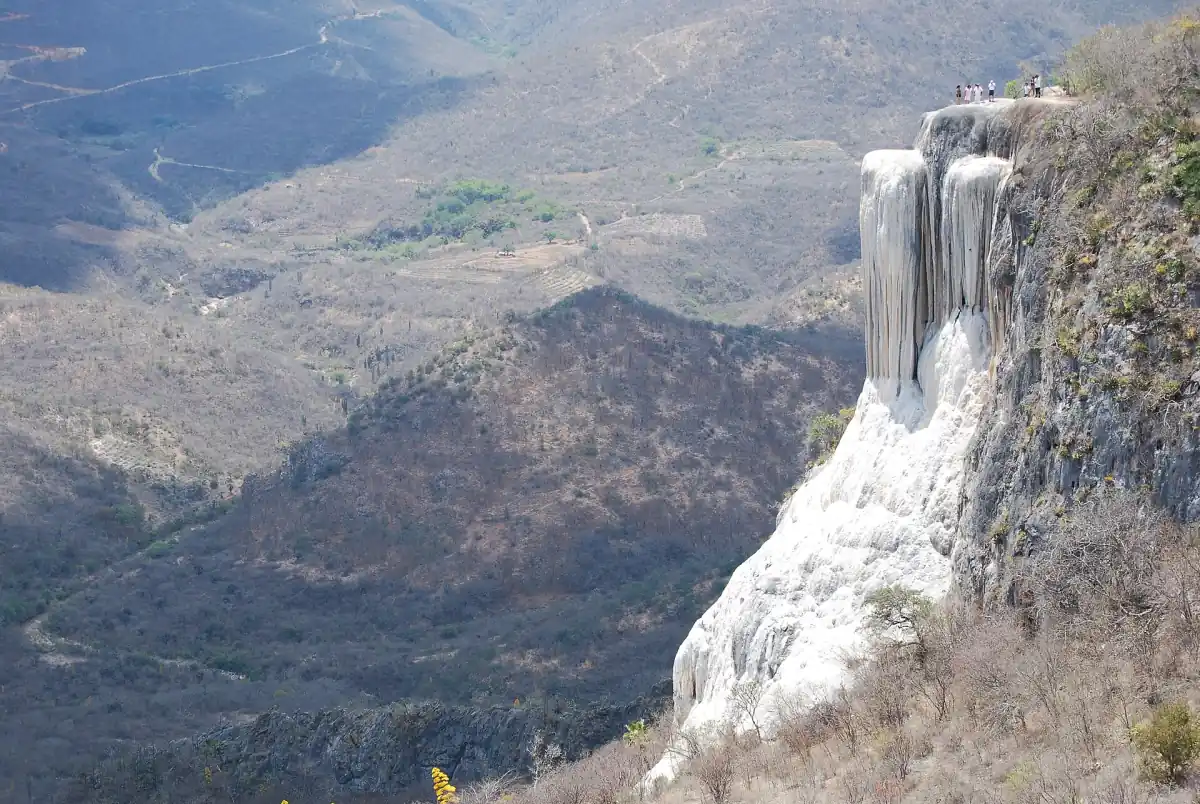
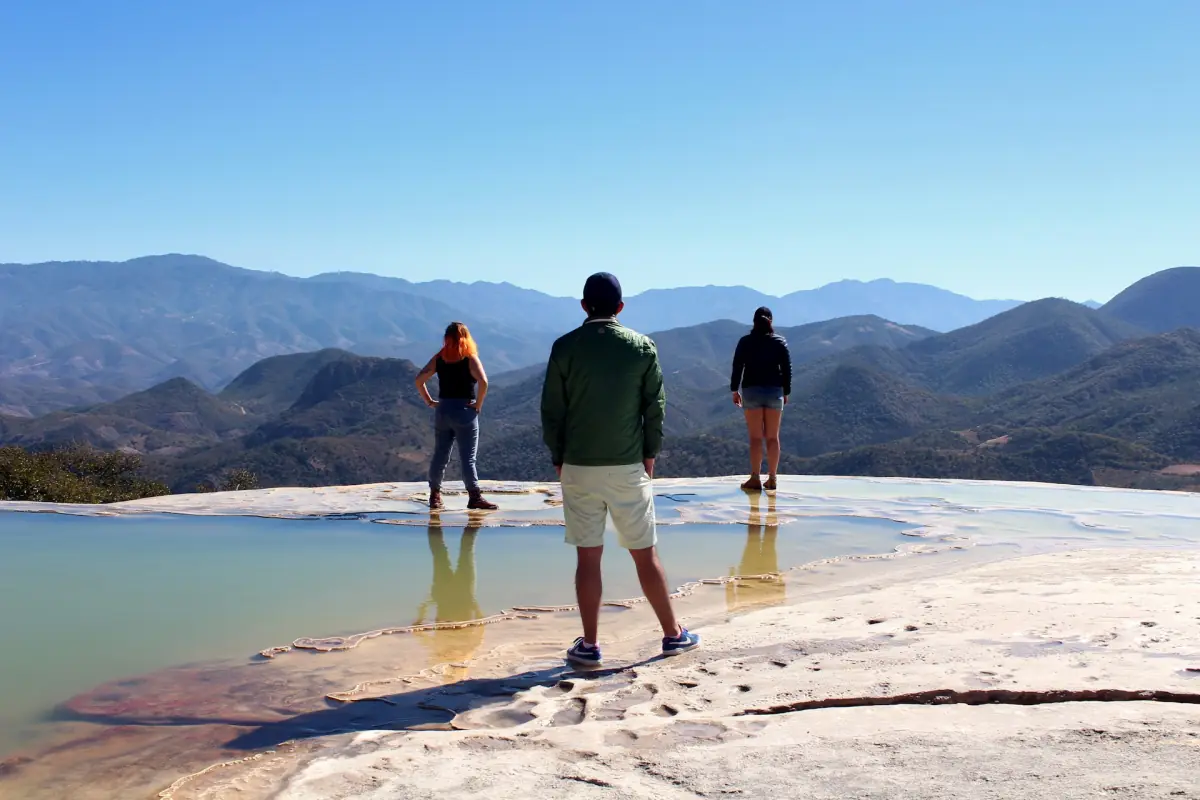
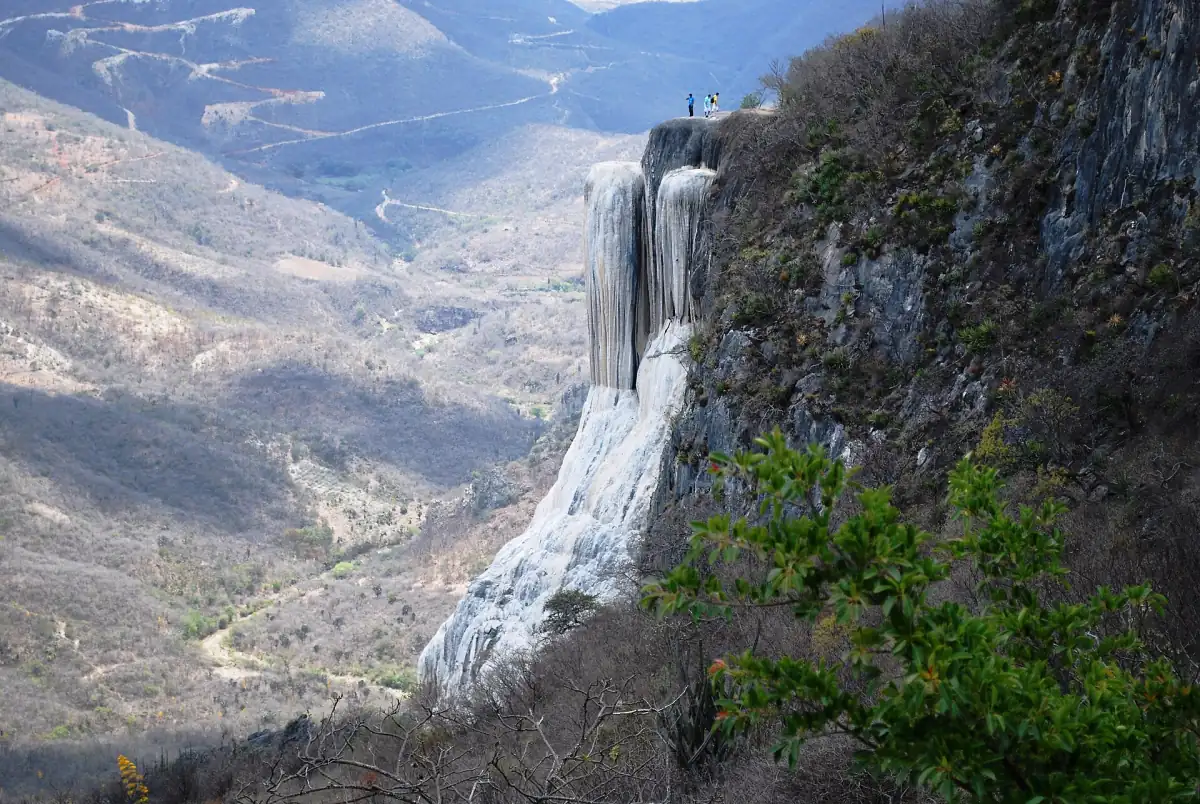
The state tourism portal describes walking around the landscape and the pre-Hispanic irrigation system, as well as the pools. Choose what matters most to you before setting the date. For a walking-led day, look at the local forecast and ask about the usable paths. For swimming, ask separately about access to the water areas on arrival.
Our walking and swimming guide compares the activities and guided options. The eight-hour excursion from Jardín Etnobotánico de Oaxaca includes transport with tolls, a professional bilingual guide, Hierve el Agua admission and bottled water. It also includes a live textile demonstration in Teotitlán del Valle, a mezcal production demonstration and guided tasting. Meals are extra.
That combination gives you landscape and cultural activities within the same booked day. Decide whether you want those additional stops or a visit focused on the springs. Use the excursion's itinerary for the day structure and the local instructions for the paths and water areas, keeping each decision tied to the information that serves it.
Check the daily forecast and opening separately
For planning as of 11 November 2026, check access for the date you intend to travel and use a fresh forecast close to departure. Ask about the visit's practical arrangements before leaving Oaxaca. Monthly climate patterns are useful earlier in the planning process, while these checks help you decide how to spend the actual day.
Give the landscape visit a place in your plan alongside any hoped-for swim. Choose a route and return arrangement that leave room for changes to your outdoor activities. A clear distinction between choosing a month, arranging the journey and assessing the day makes the seasonal information more useful.
Questions about weather and timing
Which months are drier?
November to February is the drier period in the Oaxaca station normals. Use that as regional guidance when choosing dates, then check the local forecast for your visit.
Does the table describe the weather at the pools?
The station is in Oaxaca city. The table supplies regional context; use destination-specific weather information and local instructions for your day at the cascades.
When should I plan to swim?
Choose your day with the forecast in mind and ask which water areas may be used when you arrive. Keep time for the landscape and cultural stops as part of the visit.